According to a report from the State Water Resources Control Board, 1,166 California schools — nearly 20% of the state’s K-12 schools — house at least one water fountain that serves water contaminated with more than 5 parts per billion (ppb) of lead. While 6,595 school submitted test samples, many did not test all of the sources of drinking water in the building. According to the recommendation of the American Academy of Pediatrics, water from school drinking fountains should not exceed 1 ppb of lead.
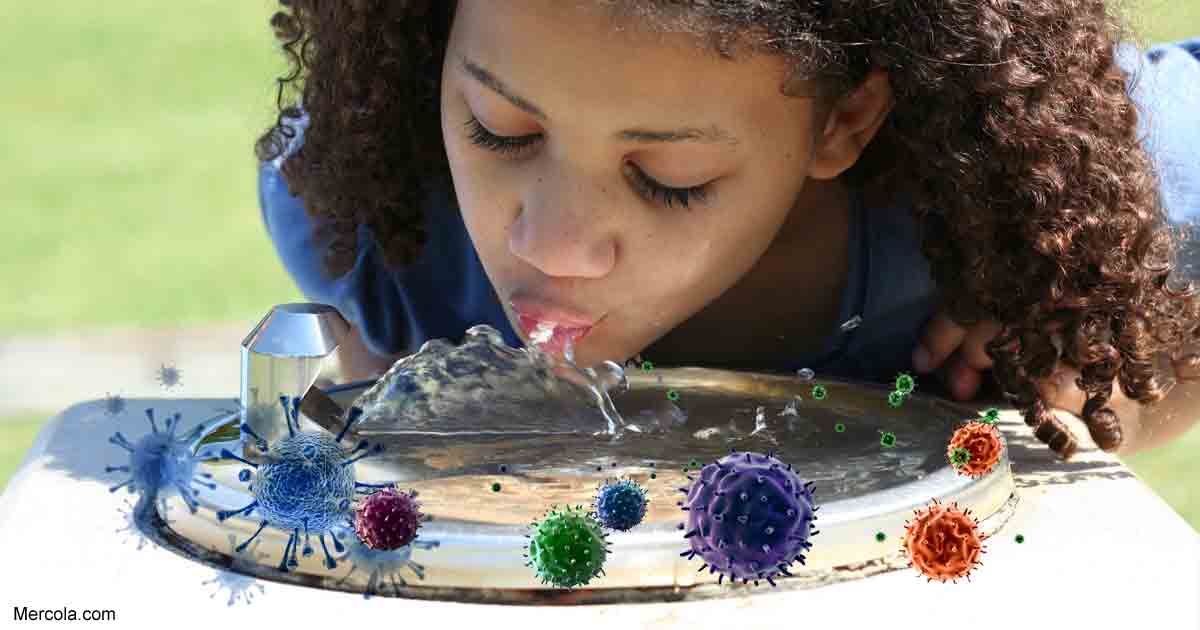
While California state law requires K-12 public school built pre-2010 to test for lead contamination in drinking water, the law does not specify that schools need to test all drinking fountains and sources of water in the building.
Susan Little, Environmental Working Group’s senior advocate for government affairs in California, said, “One-fifth of all K-12 schools have found at least one faucet on their campus that delivers a dose of lead to the children who use them. These fountains are placed in areas easily reached by children, and many of the fountains haven’t been cleared. Parents should be concerned that their children might be drinking lead during recess.”
Lead is one of the most well characterized toxins known to harm and damage your brain and nervous system. It is so toxic that it has been banned in gasoline and children's toys, and lead paint hasn't been in use since 1978, yet millions of water pipes known as service lines are still made from lead, and could be carrying contaminated water into schools, parks, office buildings — even your home.
For children specifically, lead is linked to damage to the brain and nervous system, behavior and learning problems, slowed growth, hearing problems, headaches, anemia, seizures, coma and even death.
So what can you do about lead in your drinking water? Ideally it would be best to get the majority of your water from a private well that can be tested for toxins and filtered, if necessary. Of course, this might not be an option for you, depending on where you live. The safest and most economical choice if you don't have access to a clean spring or private well is to make sure your water is filtered when it comes out of your tap, or, alternatively, when it comes into your home.